
Best Personalized Tattoos Start With Your Story
- 5 days ago
- 6 min read
A personalized tattoo should still feel like yours after the excitement of booking wears off. The best personalized tattoos are not always the biggest, most detailed, or most expensive pieces. They are the designs that connect to a real memory, person, belief, or turning point - then get shaped into artwork that looks good on your body.
That means starting with your story, but not stopping there. A great custom tattoo also needs the right style, placement, size, and artist. If you are getting your first tattoo or adding to a collection, a little planning can save you from a design that feels rushed, crowded, or too generic.
What Makes the Best Personalized Tattoos Work?
Personal does not have to mean literal. A portrait of a loved one, a child’s name, or a meaningful date can be powerful, but so can a symbol that only makes sense to you. A set of coordinates, a flower connected to your family, a handwritten note, a favorite song lyric, or an image inspired by where you grew up can all carry real weight.
The difference is in how the idea gets translated. Telling an artist, “I want something meaningful,” is a good beginning, but it leaves a lot open. Think about the feeling you want the tattoo to carry. Is it pride, love, grief, protection, growth, faith, humor, or a reminder to keep moving? That emotional direction helps an artist make stronger design choices.
A custom tattoo also has to work as tattoo art. An image may look great on a phone screen but lose clarity when it is too small, placed on a moving area, or loaded with tiny details. The best result balances meaning with readability. Your artist should be able to explain what will hold up over time and what may need to be simplified.
Start With a Clear Idea, Not a Finished Drawing
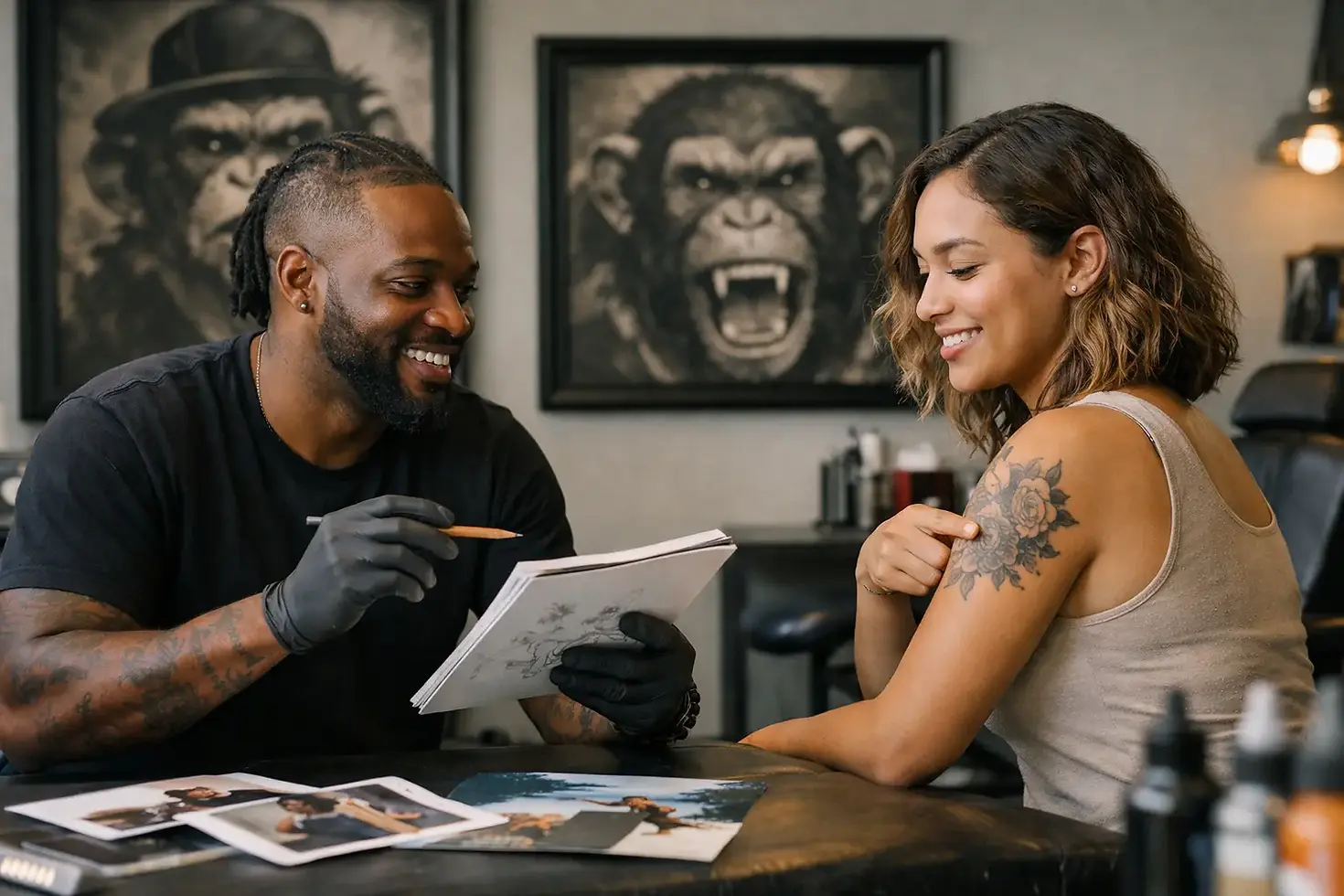
You do not need to arrive with a perfect sketch. In fact, leaving room for your tattoo artist’s input usually leads to a better piece. Bring your references, photos, colors, phrases, or rough concepts, then explain why each one matters. The artist’s job is to turn those ingredients into a tattoo that fits your skin and your style.
For example, if you want to honor a grandmother who loved roses, you are not limited to a realistic rose with her name underneath. You might use a traditional rose, her handwriting, a specific color detail, a hummingbird, or a composition built around a family photo. There are many ways to make the same story feel personal.
Try to separate your must-haves from your nice-to-haves. Maybe the date is essential, but the background is optional. Maybe you care most about a particular symbol, while the exact font is flexible. That gives the artist direction without forcing every detail before the design process begins.
Questions Worth Answering Before Your Consultation
Be ready to talk about the message behind the tattoo, the style you like, where you want it, and how visible you want it to be. It also helps to know whether you want black and gray, color, fine line work, bold traditional work, or something in between.
If you are unsure about any of that, say so. A free consultation is the place to ask practical questions and get honest guidance. You should never feel pressured to pretend you know tattoo terminology just to be taken seriously.
Pick a Style That Matches the Meaning
The same idea can look completely different in different tattoo styles. A memorial tattoo may feel soft and subtle in fine line black and gray, while a traditional design can make it bold, bright, and timeless. A name can look elegant in script, but a clean block font may age better and read more clearly from a distance.
Traditional tattoos are especially strong for personalized symbols because they use solid lines, clear shapes, and lasting color. Think hearts, roses, daggers, swallows, banners, religious imagery, or lucky symbols. These classic elements can be customized with names, dates, colors, and details from your own life without losing their impact.
Fine line tattoos can be beautiful for delicate handwriting, small floral designs, minimal symbols, and subtle placement. The trade-off is that very fine work needs enough space and contrast to stay visible as the skin changes. A smaller tattoo is not automatically easier. Sometimes making a design slightly larger is what keeps it clean years from now.
Realism can work well for portraits, pets, cars, or meaningful objects, but it calls for strong reference photos and enough room for detail. If your budget or placement only allows for a small piece, a stylized version of the idea may make more sense than trying to squeeze realism into an area that is too tight.
Placement Changes the Design
Placement is not just about showing the tattoo off. It affects pain level, how much the design moves, how quickly it may fade, and how much space the artist has to work with. A small script tattoo that looks balanced on the forearm may need a different layout on the ribs, wrist, ankle, or collarbone.
Areas like the outer arm, thigh, calf, and upper back give artists more room for a detailed personalized piece. Hands, fingers, feet, and the sides of fingers can be great for bold, simple designs, but they often fade faster and may need touch-ups. For a first tattoo, choosing a placement with a little more space can make the whole process easier.
Think about your work, daily routine, and comfort level too. A visible tattoo can be a statement. A more private placement can make the meaning feel even more personal. Neither choice is better. It depends on how you want to live with the piece every day.
Budget for Quality, Not Just the Appointment
Personalized tattoos take design time. The price can depend on the size, placement, style, amount of detail, color, and how much custom drawing is involved. A simple name or small symbol may be quick, while a larger custom piece with multiple elements will take more planning and more session time.
Be direct about your budget during the consultation. A good artist can often suggest ways to keep the idea strong without cutting the wrong corners. That may mean starting with the central element and adding more later, choosing black and gray instead of a large color piece, or simplifying a background that will not add much to the final tattoo.
The lowest price is not always the best deal if it means weak linework, poor placement, or a design you need covered later. At the same time, quality custom work should not feel out of reach. Monkey Face Tattoos focuses on giving clients strong design work and competitive pricing, with a straightforward consultation before booking.
Give the Artist Room to Do Their Job
Reference images are useful, but copying another person’s tattoo exactly is not the goal. Use those images to show what you like: the line weight, layout, lettering style, shading, color palette, or mood. Then let your artist build something original around your story.
Be open when the artist recommends a change. If they suggest moving a line, enlarging a detail, using a different font, or adjusting the placement, they are usually protecting the tattoo’s long-term look. You are still in control of your body and your idea, but collaboration is what makes custom work feel finished instead of pasted together.
Before the needle starts, check the stencil carefully. Read every word, confirm every date, look at the size in a mirror, and make sure the placement feels right when you move naturally. This is the easiest moment to speak up. A professional artist would rather adjust a stencil than have you leave uncertain.
Make the Meaning Last After the Session
Aftercare is part of the tattoo, especially when your piece includes fine details, lettering, or color. Follow your artist’s instructions, keep the tattoo clean, avoid picking or soaking it while it heals, and protect healed tattoos from heavy sun exposure. Healing can test your patience, but it has a real effect on how crisp the work looks.
Do not rush the choice just because you found an open appointment. Bring the memory, message, or symbol that matters to you, then let a good consultation turn it into a design made for your skin. The right personalized tattoo does not need everyone else to understand it - it just needs to feel right every time you see it.


Comments